How to Watch TV Without Cable?
How To Watch TV Without Cable: Check Your Complete Guide Now for Best Entertainment
How to Watch TV Without Cable: A Complete Guide for Canadian Viewers
For many Canadian households, the traditional cable subscription is no longer the only way to watch television. Smart TVs, streaming platforms, antennas, connected devices and internet-based television have created many alternatives for people who want more flexibility.
If you have been wondering how to watch TV without cable, the good news is that there are several possibilities.
You can use an antenna for free local television, subscribe to individual streaming services, use online video platforms, or consider an IPTV service that delivers television programming through an internet connection.
The right solution depends largely on what you watch, how often you watch live TV and sports, how many people use your television, and how much you want to spend each month.
Can You Really Watch TV Without Cable?
Yes.
Cable is only one method of receiving television programming.
According to the Canadian Radio-television and Telecommunications Commission (CRTC), Canadian viewers can access television through cable, satellite, IPTV, online services and over-the-air broadcasting. The CRTC specifically notes that over-the-air television can provide free access to local stations with an antenna.
That means cancelling cable does not necessarily mean giving up television.
Instead, you can build a home entertainment setup around the services and devices that match your viewing habits.
How to Watch TV Without Cable in Canada
There isn't one single answer to the question how to watch TV without cable.
There are several options.
1. Use an Antenna for Free Local TV
One of the simplest alternatives to cable is an over-the-air antenna.
Depending on your location, an antenna can receive local television stations without requiring a monthly TV subscription.
The CRTC describes over-the-air television as a free option for Canadians, with many local stations available in high definition and only minimal one-time equipment costs.
This can be particularly useful if you mainly want local news, certain Canadian channels and basic television programming.
The disadvantage is that an antenna does not provide the same variety as a full streaming or IPTV service.
2. Subscribe to Individual Streaming Services
Another way to leave cable behind is to subscribe directly to online streaming services.
Instead of paying one cable company for a large package, you can select the services that contain the movies, series or programs you actually watch.
This gives you more control, but there is an important consideration.
If you subscribe to several services at the same time, the combined monthly cost can eventually become significant.
For example, a household might have one service for movies, another for series and another for sports.
At that point, you may have replaced one large television bill with several smaller subscriptions.
3. Watch Free Online Video
There is also a large amount of free video content available online.
YouTube and broadcaster websites can provide news, entertainment, educational programming and other types of video.
The CRTC recognizes online video services as another way Canadians can access audiovisual content through the internet.
The main limitation is that free online video usually does not replace the complete live-TV experience for someone who wants a broad selection of channels and sports.
4. Consider IPTV
For people who still enjoy live television but want to move away from traditional cable, IPTV is another option to consider.
IPTV stands for Internet Protocol Television.
Instead of receiving television through a conventional cable television infrastructure, IPTV delivers television programming through an internet connection. The CRTC describes IPTV as digital television delivered to the television through a high-speed internet connection.
This can make IPTV particularly interesting for viewers who want to combine live television with internet-based entertainment.
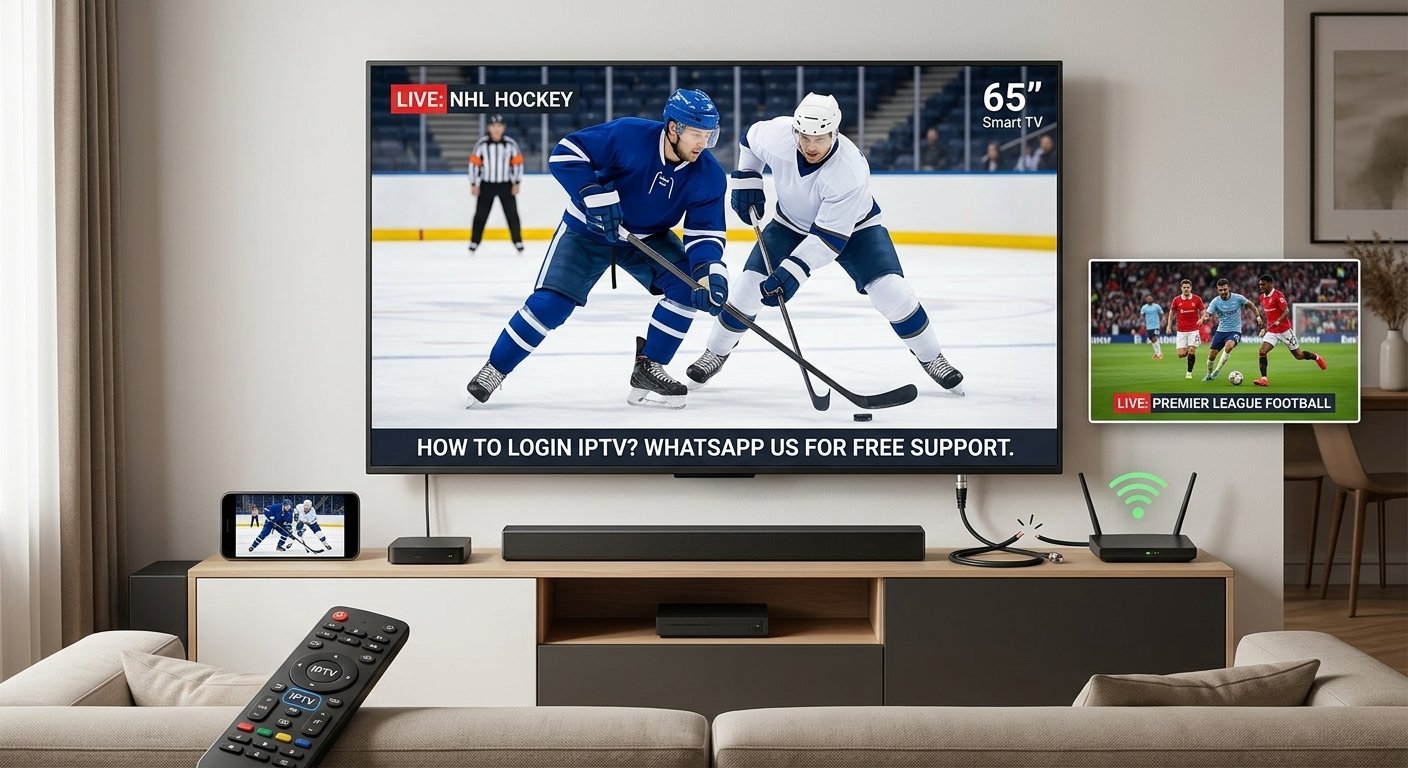
A typical setup might look like:
Internet connection → Smart TV or streaming device → IPTV application → IPTV service → Live TV and entertainment
The exact experience depends on the provider, device, application and content available.
Why Sports Fans Look Beyond Cable
Sports are one of the biggest reasons people hesitate to cancel traditional television.
A viewer may want to follow hockey during the season, watch basketball at the weekend or follow football and soccer throughout the year.
The problem with using only free online video is that live sports availability can be limited.
This is why sports fans often look for television solutions that make live programming easier to access.
For someone searching how to watch TV without cable, the question therefore becomes more specific:
How can I replace cable without losing the type of live entertainment I actually watch?
That is where IPTV and online television services can become part of the discussion.
What About Movies and TV Series?
Cable-free television does not have to mean live television only.
Modern home entertainment is increasingly a combination of:
Live TV Sports Movies TV series Video-on-demand YouTube Streaming applications Local television
This allows households to create their own entertainment environment instead of depending entirely on a traditional cable package.
For example, someone might use an antenna for local channels, a streaming service for original series and an IPTV service for compatible live television content.
The best setup depends on the household.
What Device Do You Need to Watch TV Without Cable?
Your television does not necessarily need to be replaced.
Many modern TVs already include Smart TV functionality.
You may also use a streaming device connected through HDMI.
Common options include:
Smart TV
Samsung, LG and other Smart TV platforms can run compatible streaming applications directly.
Fire TV
A Fire TV device can turn a compatible television into a connected entertainment platform.
Android TV
Android TV and Google TV devices provide another way to access streaming applications and internet-based entertainment.
Apple TV
Apple TV is another option for households that prefer Apple's ecosystem.
The important thing is to verify that the service you choose supports your specific device.
Is IPTV the Same as Cable?
No.
The main difference is the delivery method.
Traditional cable television uses a cable distribution network.
IPTV uses internet protocol technology to deliver television programming through an internet connection.
The CRTC recognizes IPTV as a distinct television distribution technology.
For consumers, this can mean a different type of home setup.
Instead of relying on a traditional cable box, compatible IPTV services can be accessed through supported applications and devices.
However, consumers should always check the provider, available programming and applicable content rights before subscribing.
How to Choose the Right Cable Alternative
Before cancelling your cable subscription, ask yourself a few questions.
What do you watch most?
Sports?
Movies?
News?
French-language television?
International programming?
Children's entertainment?
Your answer should influence the type of service you choose.
How much do you want to spend?
Compare your current cable bill with the total cost of the alternatives you are considering.
Remember to include internet service and multiple streaming subscriptions.
Do you need live TV?
If you mainly watch Netflix-style on-demand content, traditional live television may not be important.
If you watch sports and live events frequently, live TV access becomes much more important.
How many people use the TV?
A family may have completely different viewing requirements from a single viewer.
IPTVCanadaZon: Another Option for Cable-Free Entertainment
For Canadian viewers looking for an internet-based television solution, IPTVCanadaZon offers a cable-free approach to home entertainment.
The service is designed for viewers who want to access different types of entertainment through a compatible IPTV setup, including live television, sports-related programming, hockey content, movies, series and on-demand entertainment, depending on the available service and subscription.
Instead of requiring a traditional cable television connection, IPTVCanadaZon focuses on an internet-based viewing experience.
The service can be used with compatible Smart TVs and streaming devices, and customers can receive guidance during setup.
If you are new to IPTV, this can be useful because configuring an IPTV application for the first time can sometimes be confusing.
IPTVCanadaZon also provides a free trial, allowing you to test the service and see how it works with your own internet connection and device before making a longer-term decision.
How to Watch TV Without Cable: A Simple Example
Imagine a Canadian household that wants to cancel cable.
They could create a setup such as:
Antenna → Local TV
Streaming services → Movies and selected series
IPTV → Live television and sports-related programming
YouTube → Free online video
Smart TV → One central screen for everything
This approach can give the household more flexibility while reducing its dependence on a traditional cable package.
Final Thoughts
If you have been searching for how to watch TV without cable, there is no shortage of alternatives.
You can use an antenna for free local television, subscribe to online streaming services, watch free internet video or explore IPTV for internet-based television.
The most important thing is to choose your setup according to your actual viewing habits.
For sports fans, live programming may be essential. For movie lovers, on-demand content may matter more. Families may want a combination of live television, children's programming, movies and series.
IPTVCanadaZon is one option for Canadian viewers who want to explore an internet-based television experience, with compatible-device guidance and a free trial available for testing.
The move away from cable does not mean giving up television.
It means choosing how you want to watch it.